On Sunday, 4 January 2026, the Sudanese Women of Peace (SWOP) Organisation delivered a vital training session focused on Public Health. This training was designed to equip NGOs, volunteers, and staff working in medical centres – especially those operating in war-affected and emergency contexts – with essential knowledge and practical skills to protect and support their communities.
The importance of this training lies in its proactive approach to public health in crisis situations. By increasing awareness and understanding of disease prevention and early symptom recognition, participants are better prepared to respond quickly to health threats. Early identification of diseases such as cholera, dengue fever, and malnutrition can drastically reduce morbidity and mortality rates, particularly in vulnerable populations affected by conflict. Volunteers and health workers trained through this programme can act as the first line of defence, spotting warning signs early, providing immediate guidance, and facilitating timely referrals to medical facilities.
The session covered critical topics including:
- Cholera: understanding modes of transmission, prevention strategies, and community response mechanisms.
- Malnutrition: recognising early indicators, understanding associated health risks, and mitigating its impact.
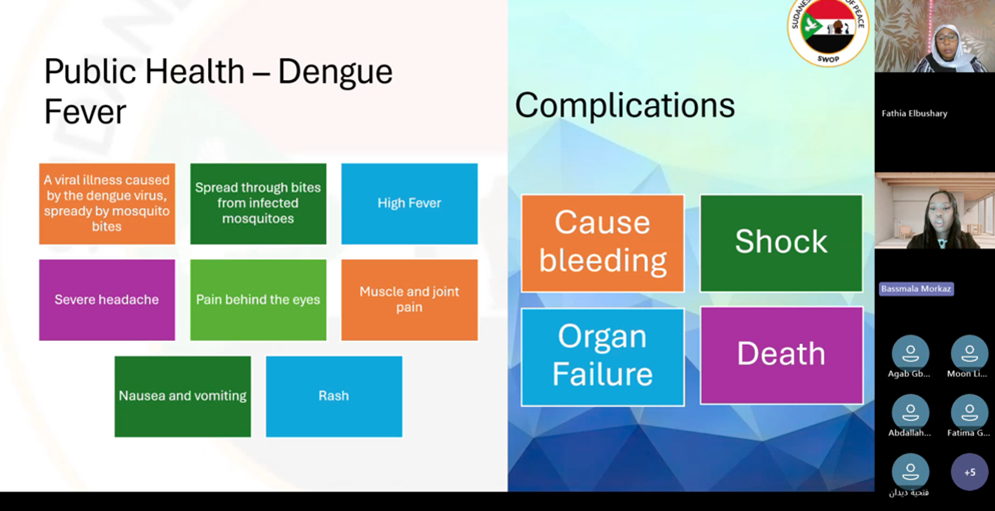
- Dengue Fever: identifying symptoms, transmission routes, and appropriate management practices.
- Dengue vs. Malaria: supporting accurate identification to ensure early referral and treatment.
By delivering this training, SWOP empowers local actors to act decisively in protecting public health, strengthens community resilience during times of conflict, and enhances the overall capacity of humanitarian efforts in Sudan. This initiative underscores the critical role of awareness and early intervention in saving lives and promoting sustainable health outcomes in fragile contexts.
Fathia Elbushary
Founder of SWOP
4th January 2026